The Rise, Fall, and Rebirth of Ronaldinho: The Tragic Magic of Football’s Child Who Refused to Grow Up
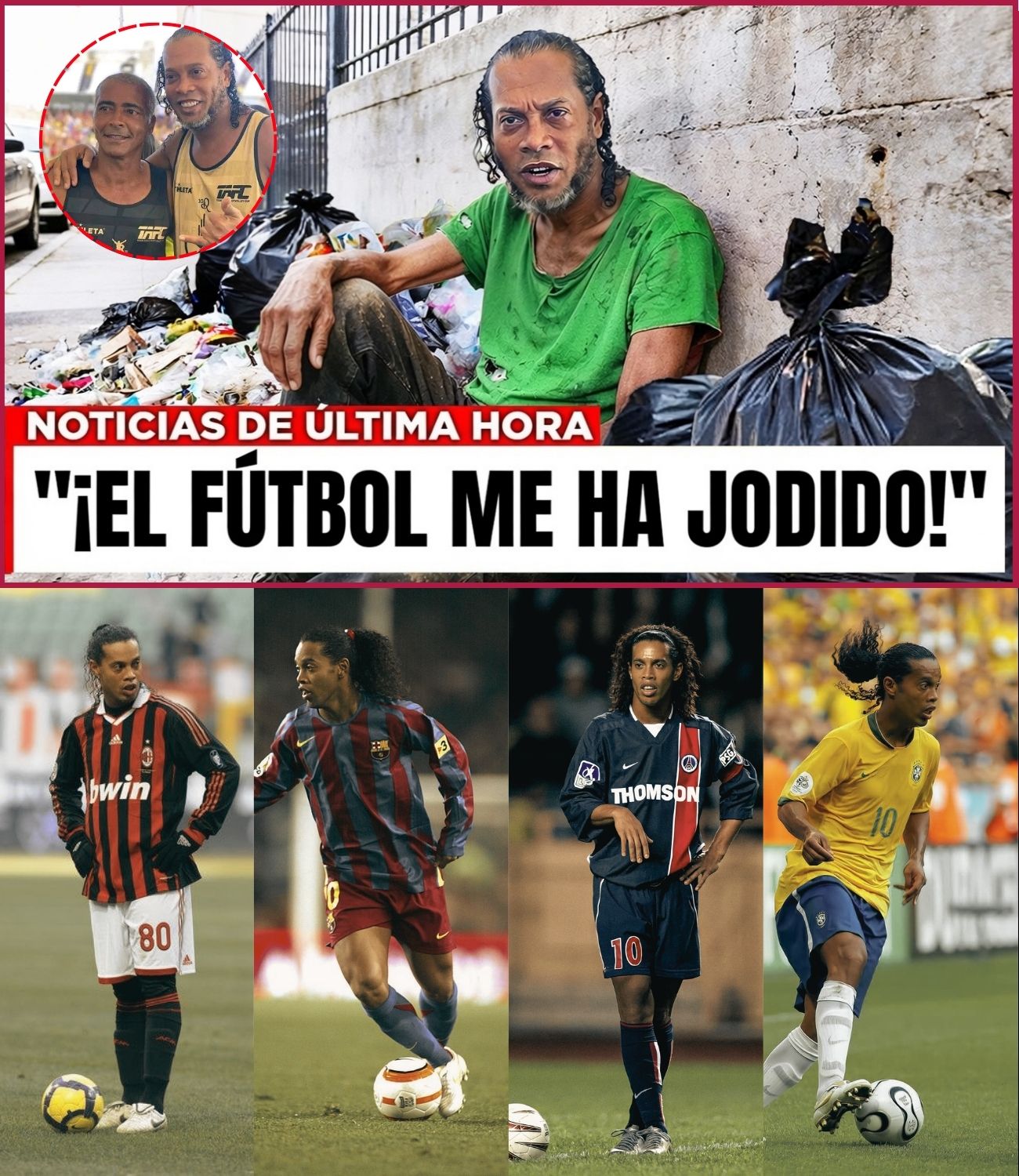
The beautiful game of football has produced numerous geniuses, tactical masterminds, and physical titans, but it has rarely witnessed a player who embodied pure, unadulterated joy quite like Ronaldo de Assis Moreira, known to the world simply as Ronaldinho. During a golden, intoxicating period in the mid-2000s, the Brazilian maestro did not merely play football; he reimagined it. With his signature gap-toothed smile, physics-defying blind passes, and elastic dribbles that left world-class defenders frozen in place like statues, he became a global icon. He achieved what many deemed impossible: he won two FIFA World Player of the Year awards, a Ballon d’Or, a World Cup, a Copa América, a FIFA Confederations Cup, a UEFA Champions League, and a Copa Libertadores. He remains the only player in history to hold this specific, glittering collection of trophies. He had everything the world could offer—wealth, adoration, and immortality.
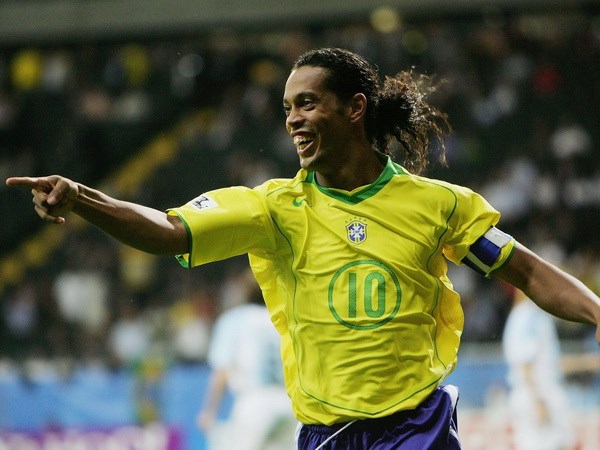
Then, in a series of events that shocked the sporting world, he lost it all. The story of the boy from Porto Alegre who conquered Europe only to find himself in a overcrowded Paraguayan prison, with mere pocket change left in his bank account, represents one of the most dizzying and surreal collapses in modern sports history.
To understand the depth of Ronaldinho’s eventual fall, one must look at the foundation upon which his fragile genius was built. Born in Porto Alegre in 1980, Ronaldinho grew up in the working-class neighbourhood of Vila Nova Brasilia. Football was a family legacy; his older brother, Roberto, was a rising professional star whose success initially lifted the family out of poverty. However, tragedy struck when Ronaldinho was just eight years old. Roberto had just signed a lucrative contract extension with Gremio, which came with a new family villa complete with a swimming pool. During a family celebration that doubled as Roberto’s eighteenth birthday and their parents’ wedding anniversary, their father suffered a fatal heart attack while swimming in that very pool.
The sudden loss shattered their world. Roberto instantly abandoned his own highest footballing aspirations to become a surrogate father, manager, and shield for his younger brother. Roberto took care of every contract, every legal issue, and every financial decision, creating a protective bubble around Ronaldinho. While this fierce protection allowed Ronaldinho’s talent to flourish without distraction—culminating in national headlines at age thirteen when he scored all twenty-three goals in a 23-0 victory for his local team—it also created a man-child. Ronaldinho grew up insulated from the real world, shielded from the consequences of his actions, and entirely dependent on others to navigate adult life.

His talent was too immense for Brazil to hold, and by 2001, he joined Paris Saint-Germain, setting the stage for his historic move to Barcelona in 2003. When Ronaldinho arrived at the Camp Nou, Barcelona was a club in crisis, hollowed out by years of inconsistency and a lack of silverware. Ronaldinho changed the trajectory of the institution overnight. Between 2003 and 2008, he transformed Barcelona into the most entertaining team on earth, winning back-to-back La Liga titles and the coveted Champions League. His performances were artistic masterpieces. In November 2005, during a historic El Clásico at the Santiago Bernabéu, Ronaldinho produced a display of such breathtaking brilliance, slaloming through the Real Madrid defence to score twice, that the famously hostile Madrid supporters stood up and gave him a resounding ovation. It was an unprecedented moment of cross-rivalry reverence.
By 2006, Ronaldinho was an economic empire. He earned twenty-six million dollars that year, with nineteen million coming solely from massive endorsement deals with Nike, Pepsi, EA Sports, and Coca-Cola. During this peak, he also took a shy, teenage prodigy from La Masia under his wing, helping him navigate the intense pressure of stardom. That teenager was Lionel Messi, who would later reflect that Ronaldinho’s guidance was foundational to his own career.
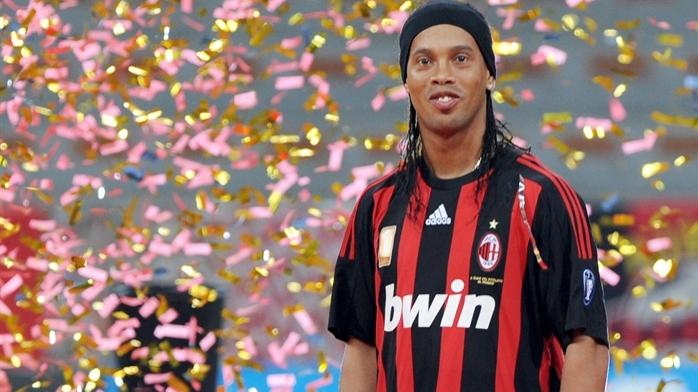
However, the cracks in the mirror were already widening. Ronaldinho’s genius was always intertwined with an insatiable appetite for nightlife. Even during his early days at Paris Saint-Germain, teammates recalled that he rarely trained during the week, often showing up only on Friday for the Saturday match. For his first three seasons in Barcelona, his unparalleled natural fitness sustained him, but eventually, his lifestyle caught up. Directors at the club harboured open secrets about his lack of discipline, noting that he would play the bongo drums until the early hours of the morning before training sessions. Rumours even circulated that later in his career, he negotiated specific clauses in his club contracts allowing him to party at least two nights a week—a limit he routinely exceeded.
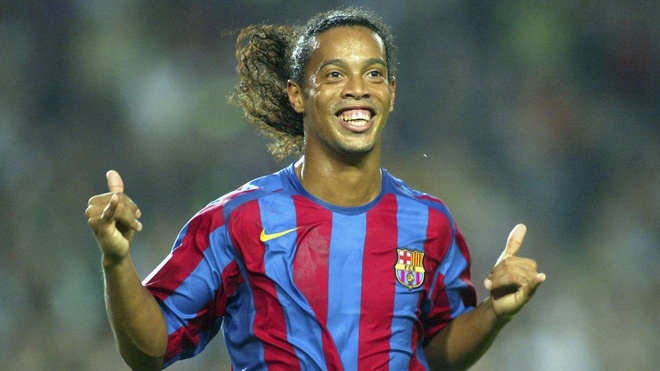
By 2008, the newly appointed Barcelona manager, Pep Guardiola, recognized that Ronaldinho’s declining physical condition and toxic lack of discipline threatened to corrupt the squad, particularly the impressionable Messi. At just twenty-eight years old, the best player in the world was effectively forced out of Europe’s elite, transferring to AC Milan, where his flashes of brilliance were increasingly overshadowed by his nocturnal exploits.
The collapse of his football career mirrored the disintegration of his commercial empire. In a legendary display of professional negligence during a press conference, Ronaldinho sat before a row of television cameras and casually opened a can of Pepsi. The issue was that he was under a lucrative seven-hundred-thousand-dollar-per-year contract with Coca-Cola. The corporate giant immediately terminated the partnership, citing the incident as the final straw in a mounting series of disciplinary embarrassments.
By 2018, the money was gone. The ninety million dollars amassed over his career had evaporated through a combination of lavish spending, mismanagement, and unpaid debts. Reports emerged that Brazilian authorities checked his bank accounts to settle a legal debt and found less than five pounds remaining. In 2019, the situation worsened when the Brazilian government seized fifty-seven of his properties due to massive unpaid taxes and environmental fines. One fine stemmed from an illegal, unpermitted fishing pier he constructed at his lake house in Porto Alegre. When he refused or was unable to pay the millions owed, authorities confiscated both his Brazilian and Spanish passports, leaving the former global jet-setter trapped within his home country, buried under a mountain of debt.
Yet, the most bizarre chapter of his life was still to come. In March 2020, wanting to travel to Paraguay for a promotional tour and charity event, Ronaldinho and his brother Roberto encountered an obvious obstacle: they had no passports. In an astonishingly reckless move, their management obtained counterfeit Paraguayan passports. On 4 March, the brothers landed in Asunción, only to be arrested days later in their hotel room when investigators realized the documents were fraudulent.
The entire scheme was wrapped in absurdity. Under regional agreements, Brazilian citizens do not even require a passport to enter Paraguay; a standard national identity card is perfectly sufficient. Ronaldinho had engaged in criminal document forgery for a document he never needed to cross the border. Furthermore, attempting to use a fake identity document for one of the most universally recognized faces on the South American continent was a plan destined for immediate failure. His own defence lawyer later described the incident to the media with brutal honesty, stating that Ronaldinho simply did not understand he was committing a crime, concluding with the words: “He is stupid.”
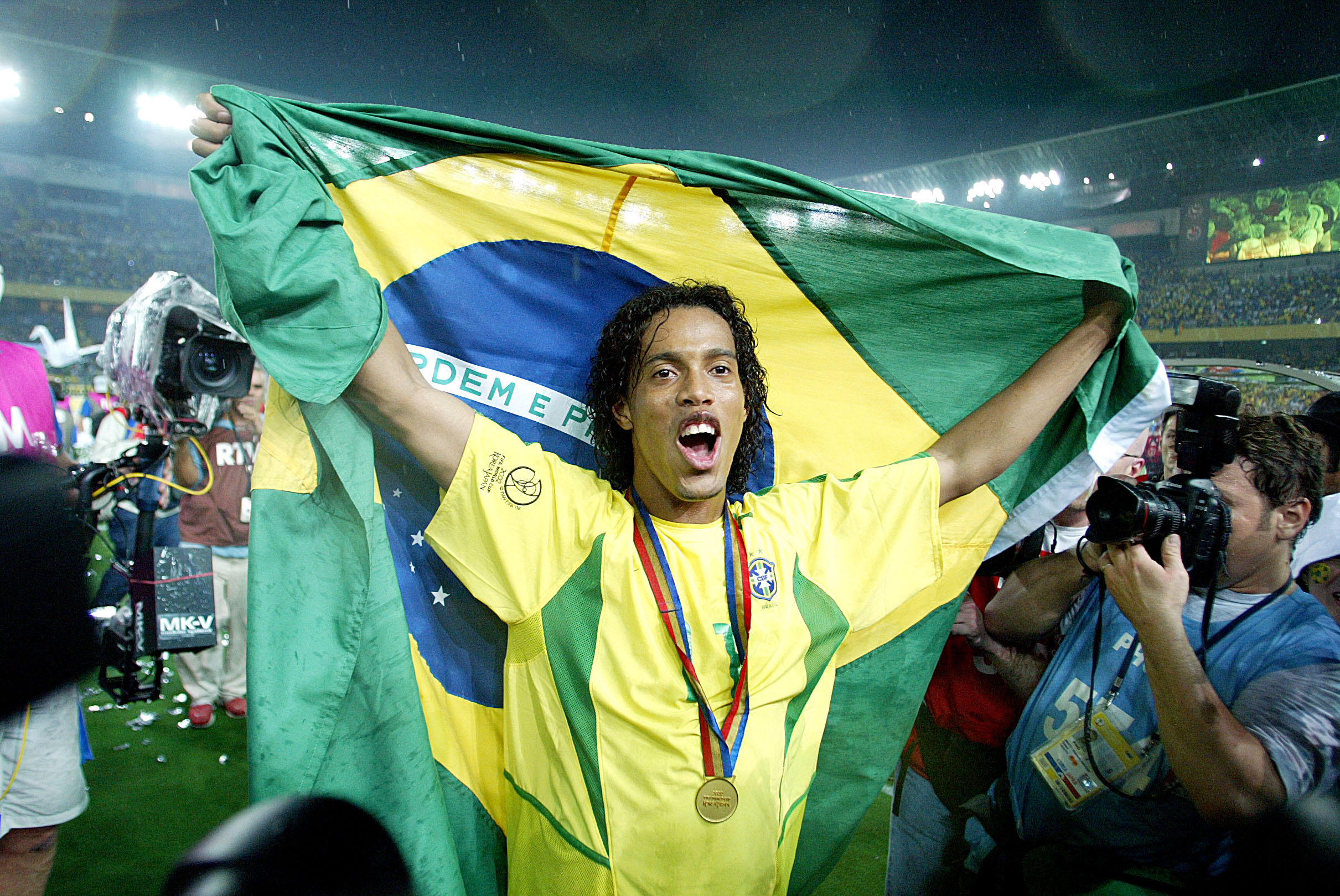
Ronaldinho spent his milestone fortieth birthday inside the maximum-security Takumbú prison in Asunción. For a man defined by joy and laughter, the confinement was a devastating blow, with friends visiting him reporting that his famous smile had completely vanished. Yet, even behind bars, the myth of Ronaldinho persisted. He became a beloved figure among the inmates, spending his days signing autographs and eventually participating in a prison futsal tournament. The prison cellblocks held a draft to see who would secure the legendary forward for their team. Ronaldinho put on a clinic, leading his side to an 11-2 victory in the prison yard. After thirty-two days in a crowded cell and several months under house arrest in a luxury hotel funded by a 1.6-million-dollar bail payment, the brothers accepted a plea deal, paying substantial fines to return to Brazil.
Many assumed this public humiliation would force a retreat into a quiet life, but Ronaldinho’s affinity for chaos continued. Shortly after his return, his name was dragged into a massive sixty-one-million-dollar cryptocurrency fraud investigation in Brazil involving a company called 18K Ronaldinho, which promised impossible daily returns of two per cent. Ronaldinho was summoned to testify before a congressional hearing regarding his involvement in the suspected Ponzi scheme. True to form, he missed his first two government court dates, bizarrely blaming bad weather for his inability to catch a flight. When he finally appeared under the threat of forced police arrest, he invoked his right to remain silent, sitting stone-faced before angry legislators for two hours, denying he ever authorized the use of his image.
Remarkably, against all economic logic, Ronaldinho managed to rebuild his life once more. By early 2026, financial audits estimated his net worth had rebounded to approximately sixty-three million euros. Leveraging his colossal social media footprint of over one hundred million followers across platforms, he transformed himself into a high-earning digital influencer, commanding upwards of a quarter-million dollars for a single promotional post. He launched a successful clothing brand, formed a music collective called Tropa do Bruxo, and toured the globe playing in lucrative exhibition matches for nostalgic fans. Personally, his life entered a new era as he became a grandfather at forty-five, following the news that his son, Joao Mendes, was expecting a child.
The enduring fascination with his chaotic life culminated in the release of a highly anticipated global documentary series, which brought his triumphs and scandals back to the forefront of public consciousness. The project featured deeply personal reflections from peers like Cristiano Ronaldo, David Beckham, and Lionel Messi, all paying homage to his unmatched talent. In rare moments of vulnerability during the documentary, Ronaldinho wept, showing flashes of anger regarding the media narratives that trailed him during his final days in Barcelona, revealing the sensitive soul beneath the party-boy persona.
Ultimately, looking at Ronaldinho at this stage of his life, one is left with a complex narrative. Is his story a tragedy? In many ways, yes. A player with his transcendent ability should have enjoyed a fifteen-year reign at the pinnacle of the sport, retiring as a decorated statesman of football. His career was undeniably cut short by an unstructured lifestyle and a refusal to sacrifice his personal pleasures for professional longevity.
Football experts suggest that the early death of his father instilled a deep-seated philosophy within the young boy: life is short, unpredictable, and can be snatched away in an instant, so one must consume every drop of joy today without worrying about tomorrow. Ronaldinho lived his life precisely by that creed, whether on the pitch of the Camp Nou or inside a Paraguayan jail. He remains football’s ultimate Peter Pan—a boy who refused to grow up, who stumbled spectacularly, but whose infectious magic was so profound that the world simply refused to stop loving him.
Disclaimer : This content may be created by AI for entertainment purposes. Any resemblance to real persons, events, or places is coincidental.
